Screw Pier Installation for Decks | NSW Homeowners Guide
If you’ve planned a deck in Sydney, Campbelltown, Wollondilly, Wollongong, Nowra or along the South Coast, you’ve probably been told you’ll need concrete footings, deep holes, lots of mess, and days of waiting for it to cure.
There’s a cleaner, faster option: screw pier installation for decks. Screw piers (also called helical piers or screw piles) are steel shafts with spiral plates that are literally screwed into the ground. They reach stable soil quickly, carry serious loads and are ready to build on almost straight away.
In this guide, you’ll learn what screw piers are, why they’re ideal for decks in NSW, how they compare with concrete, and how to install screw piers for decks with a professional crew. You’ll also see when they’re the right choice for your site and what to expect when you work with a licensed screw pier specialist like MRN Excavations across Sydney, Wollondilly, Wollongong, Nowra and the South Coast.
By the end, you’ll understand how screw pier foundations work under your deck, how to plan for them, and how to move from the first site visit to final certification with confidence.
What are Screw Piers and Why They’re Ideal for Decks
Sydney and the South Coast cover a mix of sandy coastlines, clay-based suburbs and sloping bush blocks. Deck foundations need to handle all of that. Screw piers are designed to work in varied soils and on tricky sites, which is why more local decks are being built on them instead of traditional concrete.
What are screw piers?
Screw piers are engineered steel foundations made up of:
- A central, usually galvanised steel shaft
- One or more helical (spiral) plates are welded near the tip
- A head or bracket that connects to your deck frame
They’re installed by rotating the pier into the ground with specialist machinery until the installer hits a specified torque reading. That torque tells them they’ve reached soil strong enough to carry the designed load.
Once installed, each screw pier acts like a deep leg for your deck, transferring weight down into firm soil below reactive clay, fill or softer surface layers. If you’d like to compare screw piers with other footing options, see our
guide to different foundation piers for Aussie homes. For raised decks in areas like Campbelltown, Wollondilly and the South Coast, this deep support is a big advantage.
Benefits for Decks
For NSW homeowners and small builders, screw piers offer some very practical benefits:
Fast installation
Footings can often be installed in hours, not days. There’s no waiting around for concrete to cure, so your builder can start framing soon after installation.
Minimal excavation and mess
Instead of digging large holes and stockpiling soil, the machine screws each pier into the ground. That means less spoil to remove and far less damage to lawns, driveways and gardens.
Works in a wide range of soils
Screw piers can be extended deeper to reach stable ground beneath sand, clay or controlled fill (we break down how different soils behave in this
soil types for screw piling guide). On reactive sites, they provide more predictable performance than shallow concrete pads.
Ideal for sloped or tight-access sites
Compact machinery and small footprints make screw piers perfect for narrow side yards, rear-lane access, and sloping South Coast blocks where large excavators are impractical.
Lower environmental impact
Less excavation means less disturbance and less waste. In some cases, screw piers can be removed or reused if you ever relocate or significantly alter the deck.
Engineered, traceable performance
Because depth and torque readings are recorded, you get a clear record that your footings have been installed to the engineer’s design, handy for certifiers, insurers and future buyers.
Screw Piers vs Concrete Footings for Decks
Concrete is still common for deck footings, but it’s no longer the automatic choice. When you compare screw piers and concrete side by side, especially on real-world Sydney and South Coast sites, the differences stand out.
Installation speed and method
Screw piers
- Installed with a small excavator or hydraulic torque head
- Driven to engineered torque and depth
- Capped and ready for deck framing almost immediately
Concrete footings
- Holes must be dug, potentially boxed and cleaned
- Spoil needs to be stockpiled and taken away
- Concrete is poured, then it needs time to cure before loading
Even on a modest backyard deck, concrete footings add extra site time and downtime while you wait for the concrete to reach strength. Screw piers compress most of that into a single neat operation.
Soil adaptability
Screw piers can be:
- Extended through soft or reactive surface soils to reach stable material
- Adjusted on the day if deeper support is needed
- Verified via torque readings during installation
Concrete footings depend heavily on the top metre or so of ground. In highly reactive clay or poorly drained soils, shallow concrete can move, crack or tilt over time if it isn’t carefully designed and reinforced. For clay-heavy suburbs and filled sites, screw piers often provide more predictable, engineering-friendly support.
Site impact
Screw piers
- Need only small entry points at each footing
- Produce minimal spoil and less mud
- Are kinder to existing turf, paving and landscaping
- They are easier to install under or close to existing structures
Concrete footings
- Require larger holes and more excavation
- Generate more spoil to move and dispose of
- Often leads to extra landscaping and reinstatement work afterwards
If you’ve invested in landscaping or need to keep neighbours happy in a tight Sydney street, screw piers are usually the less disruptive option.
Cost comparison
Upfront, individual screw piers can cost more in materials than basic concrete. But that’s only part of the picture.
With screw piers, you often save on:
- Heavy excavation and spoil removal
- Formwork and reinforcement labour
- Concrete truck costs
- Project delays while waiting for the concrete to cure
With concrete, the materials might be cheaper, but:
- Labour, excavation and reinstatement add up fast
- Reactive or steep sites can require deeper, more complex footings
Extra spoil can also blow out the budget; we explain this in our soil removal cost guide. When you look at total project cost, time, labour, and disruption included, screw piers often come out ahead, especially on sloping, tight-access or reactive sites.
Step-by-Step: How Screw Pier Installation for Decks Works
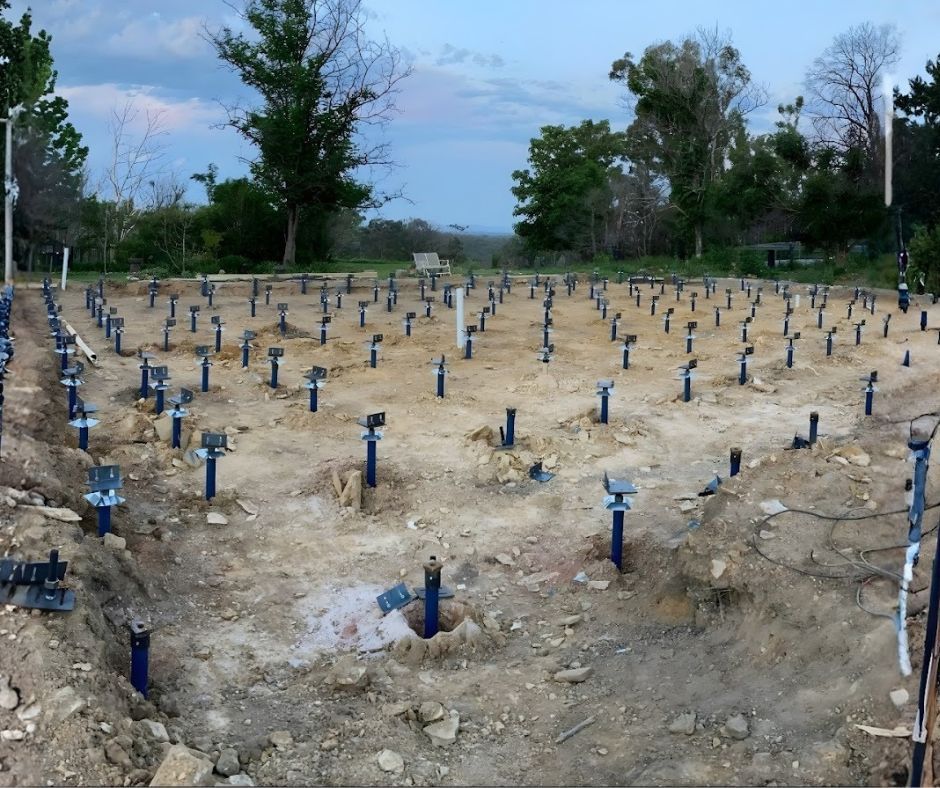
Searching “how to install screw pier for decks” will show you a mix of diagrams and how-to videos, but a professional installation follows a structured process. For a deeper look at the mechanics behind them, check out our guide on how screw piles work. Here’s what it typically looks like with an experienced crew like MRN Excavations across Sydney, Campbelltown, Wollondilly, Wollongong, Nowra and the South Coast.
Planning & assessment
- Initial consult & site visit
- The team discusses the deck size, height and use, then inspects the site to check access, slope, existing structures and likely soil conditions similar to their work on
excavation projects in Campbelltown.
- Soil and footing design
Your engineer or designer specifies the number, size and type of screw piers based on deck loads and site classification. On reactive or unknown ground, a soil report is often recommended. - Set-out
Pier locations are marked so they line up with bearers, joists, stairs and any concentrated loads like roofed areas or pergola posts.
Installation
- Services and setup
Underground services (water, sewer, power, gas, NBN) are located and marked. Access routes are planned to minimise disruption to lawns and paving. - Driving the piers
- A compact excavator or torque motor screws each pier into the ground
- The installer monitors depth and torque against the engineer’s requirements
- Extensions are added as needed to reach the specified bearing stratum
- Cutting and capping
Once the required torque is achieved, the pier is cut to height. Galvanised caps or brackets are installed to suit your deck framing timber or steel.
Post-installation
- Final checks
Heights, alignment and positions are confirmed so the deck builder can frame accurately without excessive packing or shimming. - Deck framing
With screw piers, there’s no curing delay; framing can usually begin straight after installation, keeping your project moving. - Compliance documentation
Installation data (depths, torque readings, photos) is provided as needed for your engineer, certifier or council. This paperwork proves your screw pier installation for decks complies with the approved design.
When Are Screw Piers the Right Choice?
Screw piers aren’t mandatory for every deck, but there are many situations where they clearly outperform traditional concrete footings:
- Challenging soils
- Sandy coastal sites around
Wollongong and
Nowra, clay-heavy suburbs in
Campbelltown and Wollondilly, or filled sites often suit deeper, controlled footings like screw piers.
- Sloping or poor-access sites
If your backyard drops away, or access is via a narrow side path, screw piers can usually be installed with light, compact machinery and minimal excavation. We use similar techniques on tougher off-grid and rural blocks; see ourremote screw pier installation guide. - Minimal disruption needed
If you’d rather not tear up gardens, pool surrounds, or new turf, screw piers offer a small footprint and much less reinstatement. - Tight timelines
When you’re aiming for a deck ready for summer, tenants, or a sale campaign, the quick installation and no-cure wait of screw piers are a major plus. - Close to homes, pools or trees
Smaller, targeted footings make it easier to work near existing house foundations, pools and retained trees without over-excavating or undermining nearby structures.
Tips for NSW Homeowners and Small Builders
These quick tips will help you get the best results from your screw pier project:
- Choose experienced, licensed installers
Look for a crew with specific screw pier and civil foundation experience, not just general excavations.MRN Excavations, for example, is led by founder Mathew Neal, a licensed contractor with over 7 years’ screw pier installation experience and more than 13 years in excavation and civil foundations in NSW. - Confirm underground services before work starts
Insist on accurate service location for power, water, sewer, gas and data. It’s essential for safety and to avoid nasty surprises or repair bills. - Get the paperwork right
Make sure you have: - A soil report or site classification is required where required
- Structural engineering that specifies screw piers as your footing system
- Inspection and certification records for approvals, insurance and resale
- Think long-term, not just the lowest upfront cost
Properly designed and installed screw piers may cost a little more than “basic” footings, but they significantly reduce the risk of movement, sagging and expensive rectification later. - Keep clear records
Store approvals, drawings, torque logs, installation photos and certificates together. Future builders, certifiers and buyers will appreciate knowing exactly what’s under the deck. - Use local knowledge
A team that regularly works in your part of Sydney or the South Coast will already understand common soil behaviours and local council expectations, and can flag issues early in the process.
Key Takeaways
- Screw piers are a fast, efficient, low-impact alternative to concrete footings for decks, particularly on reactive or unknown soils.
- They’re ideal for sloping blocks and tight-access sites in Sydney, Campbelltown, Wollondilly, Wollongong, Nowra and the South Coast, where traditional excavation is difficult or disruptive.
- With a professional crew, screw pier installation for decks is often a one-day operation, meaning your builder can start framing almost immediately.
- For homeowners and small builders, screw piers usually mean less mess, shorter build times and more consistent long-term performance than basic concrete pads.
- Working with licensed, experienced specialists and following soil and engineering advice is the safest way to ensure your deck foundations meet NSW standards and perform for years.
FAQs
Q1. What is a screw pier, and how does it differ from a concrete footing?
A screw pier is a steel shaft with helical plates that’s screwed into the ground to support a structure. It reaches firm soil at depth and can be loaded immediately. A concrete footing is a hole filled with reinforced concrete that has to cure before use. Screw piers are faster to install, create less mess and offer more predictable performance in varied soils.
Q2. Are screw piers strong enough to support a full-sized deck?
Yes. When designed by an engineer and installed correctly, screw piers can easily support full-sized decks, outdoor rooms and even building extensions. The number, size and depth of piers are tailored to your deck’s loads and your soil conditions. They’re also widely used under smaller structures like sheds and garages, see our screw pilefoundations for sheds and garages for examples.
Q3. Can screw piers be installed in all soil types?
Screw piers can be designed for the most common soil types in NSW, including sand, clay and controlled fill. Extremely rocky sites or large boulders can make installation difficult, in which case your engineer may recommend an alternative footing system.
Q4. How long does it take to install screw piers for a deck?
For a typical residential deck, installation is often completed in a single day, depending on access and the number of piers. Because there’s no concrete curing time, your builder can usually start framing shortly afterwards.
Q5. Are screw piers reusable or removable if I want to relocate the deck?
In many cases, screw piers can be unscrewed and removed if you significantly change or relocate the deck in future. Whether they can be reused will depend on their condition, protective coating and what your engineer specifies for the new location.
Q6. Is council approval required for screw pier installation in NSW?
Council approval usually relates to the overall deck, not just the footing type. If your deck needs approval due to size, height, location or bushfire zone, the screw pier system will form part of the engineered plans lodged. Your certifier or council may also require proof of installation and certification.
Q7. Are screw piers more expensive than concrete footings?
Per footing, screw piers can cost more in materials than basic concrete. However, when you factor in excavation, spoil removal, concrete delivery, curing delays and reinstatement, screw piers are often comparable or cheaper overall, especially on difficult sites.
Q8. Do I need an engineer’s certification for screw pier foundations?
In most cases where approval is required, yes. An engineer will specify your footing system and may need to certify the screw pier design and/or installation. This helps ensure compliance with the National Construction Code and relevant Australian Standards.
Q9. Will screw piers work on a sloped or narrow-access site?
Yes, screw piers are particularly well-suited to sloping and tight-access sites. Compact machinery and small footprints make it easier to work behind existing homes, on steep blocks and in narrow side yards without major excavation.
Q10. How do I choose a reliable screw pier installer in NSW?
Look for a contractor who is properly licensed and insured, has proven experience with screw piers and civil foundations, understands local soil conditions, works with engineers and certifiers, and can provide clear quotes and documentation. A team like MRN Excavations, with extensive screw pier experience across Sydney and the South Coast, is a strong starting point.